A Victory Garden for Your Homestead
Do you have a garden planted yet?
How about little seedlings?
Food prices rising. Grocery shelf gaps.Less global fertilizer supply.
War shutting down production and shipping of essential grains.
An unstable economyTrucker shortages, coupled with fuel price increases
Has any of this gotten your attention yet?
Whether you live in the city, the country, on a farm, or in a high-rise apartment building, you need a way to eat food! Your family depends on you to put something to eat on the table, so with all of these uncertainties, now, more than ever, it’s a good time to grow food. I don’t know about you, but our family has determined to make our garden a priority this year and from here on out!Time to Wake Up!
My husband recently listened to and recommended that I watch This video, dealing with the global food crisis. People are seeing it, and it’s time we all wake up to understand that life as we know it will not be the same, as our grain supply, a major source of our food oil, and other major crops simply will not be available. We have never known rough times—not in my generation. But, the global crisis is leading towards less food for all, so the wise will take notice!
In past war times, families were encouraged, strongly, to do their part to assist the war efforts by planting a Victory Garden. With food shortages during war time, the family garden became more than a side hobby.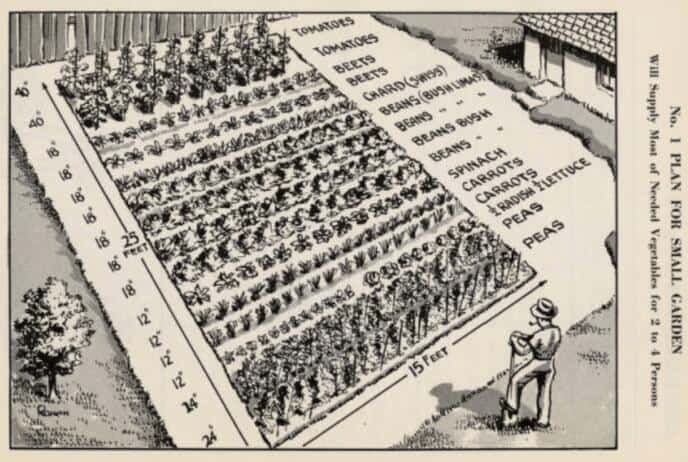
The Victory Garden
The Victory Garden was promoted as a simple way to include the basic plants to feed a family of 4-5, on a long-term basis.
During WW2, many people is the USA lived in more urban settings than in the previous century. Small homes, tiny kitchens, and postage stamp-sized yards were the norm. Blessed families still resided in country homes/farms, and these fared better than those in urban areas. But, everyone could still grow a garden, and many did! They turned their small yards into gardens!My Introduction to the Victory Garden Idea
Several years ago, as a homeschooling outing, we toured the American Museum of Science and Energy, in Oak Ridge, TN. For those who aren’t aware, this was the secret city that housed the technology and manpower that produced Fat Man and Little Boy, and nuclear weapons our country dropped on Hiroshima.
In Oak Ridge, we toured sample houses where the workers lived. Like I mentioned, the houses were tiny, but each yard contained a small, but productive garden. Wartime propaganda posters hung around, with slogans such as“Can All You Can!”
and
“Grow a Victory Garden!”
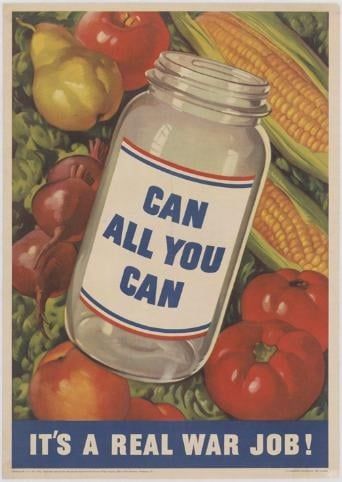
I honestly had no idea what that was—the Victory Garden, but soon learned. I thought it made a lot of sense. I liked the Can All You Can slogan. I think that would be wise for all of to do, not for the war effort, but as a common-sense way of providing for our own when food supplies are unpredictable.
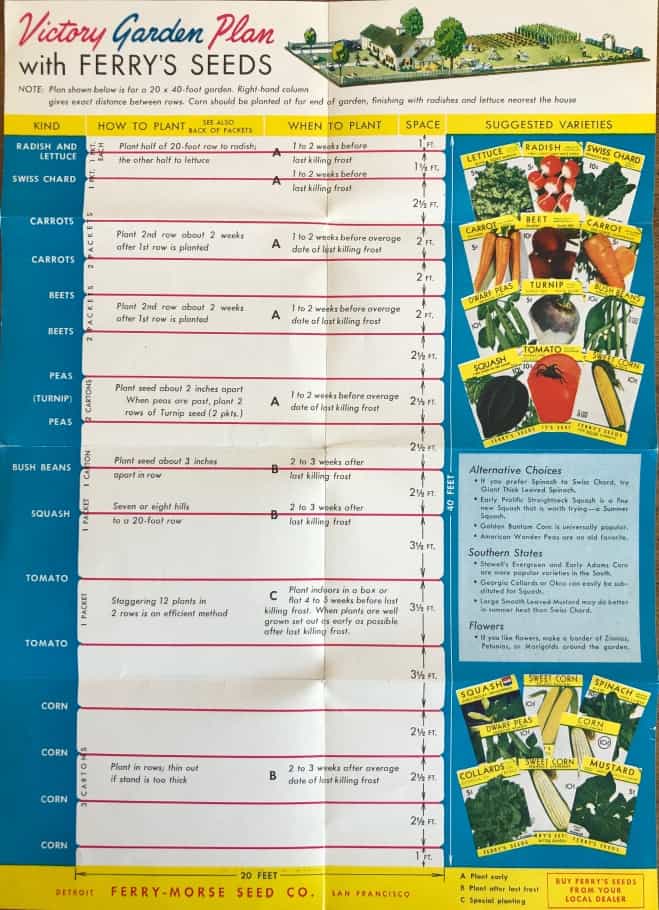
The Victory Garden principle is alive and well! A quick Google or Pinterest search will provide tons of methods and layouts. I personally think it’s smart.Here are a couple of basic layouts for your Victory Garden:
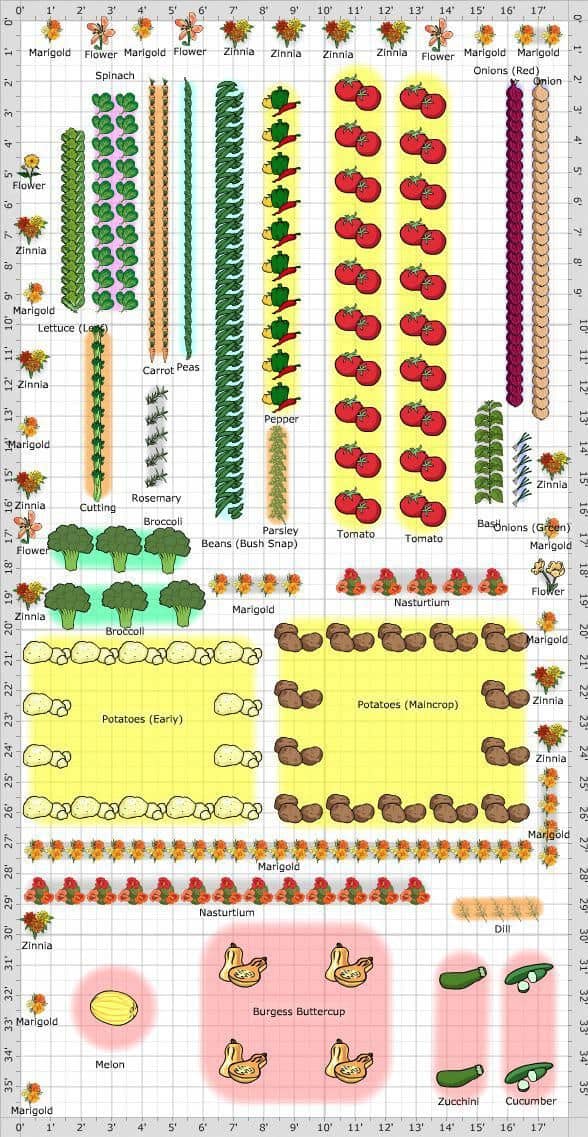
Here’s a vintage video explaining the Victory Garden from the WW2 era It’s dated, but still interesting
https://youtu.be/UHkGJEiDpdwThe idea has been improved upon over the years, and now we have better instruction on how to make our gardens with organic methods and more efficient tools, but the basic idea is the same. Gardening is still gardening!
Why Grow a Victory Garden?
The main principle behind the Victory Garden is to grow as much food as possible in a small space, for nutrition, calories, and hydration.
Also, when individuals grow their own food, that frees up some of the demand on the farmers, who can lower the price of what they produce (in theory, anyway). Many farmers this year are simply not going to be able to grow as much, what with the wheat shortage, as well as the fertilizer freeze. We can’t rely on the food supply—supplementing with what we grow ourselves is really the only physical way we can ensure that we eat. Naturally, there are variables with individual gardens too, but we can at least do our best! And I’m not negating the need to keep trusting our Heavenly Father to provide for our needs but we are counseled to provide for our own families
Guidance for Growing a Victory Garden
I like the schedules of what to plant when. It clears up the guesswork, and helps those who may be just beginning.This YouTube video is good for beginners as well She does a good job explaining, and although I don’t live in her zone, I found her video quite helpful. https://m.youtube.com/watch?v=21DeptRxf8E
If you don’t have a garden plot available, try your front yard! If you don’t even have that, try raised garden beds or boxes like the ones made of metal in the above video. I’ve seen whole gardens planted in 4x8’ raised garden beds. My mom has grown a surprisingly large quantity of produce from her Earth Boxes set up on cinder blocks in the back yard.
Steps to Begin Your Own Victory Garden
- Educate yourself. Watch some how-to videos for your particular area. YouTube has a ton! Here is a good overview, along with zone maps, vegetables to include, etc.
- Print out a layout that you can adapt to your yard. Most Victory Gardens are designed to take a small space and produce large, continuous yields.
- Decide whether you will need to till up a plot, make raised beds, or make your garden in large containers.
- You’re going to need good Seeds from a reputable source. Choose non-GMO seeds that will grow in your zone.
- Dig in!
- Involve the whole family!
- Keep it growing! In order to keep a continuous food supply, you need to succession plant. This means that you have to consult the planting guides for when the harvest will come in. Make sure you have enough planted, like in 2-4 week intervals, so that you don’t run out.
- Save your seeds when you’re done! Saving Seeds for Sustainability
- ”Can all you can!” It’s not so hard, and it ensures you food
- Repeat next year, and all through the seasons. Cool weather crops for the Fall/Winter, warm weather crops for the summer.
Don’t wait to begin your Victory Garden! Get it going as soon as you can, so you can reap the benefits of food in the months to come!
If you need more inspiration, fellow blogger from My Homemade Roots blog shares her tips with us in her post: Tips for Starting a Victory Garden Just for Fun!
Below are some of the wartime propaganda posters, which you can still purchase on Amazon.com for your garden inspiration!




I think we may be moving in this direction, whether we like it or not!
Everyone doesn’t need huge! But we should all think about growing what we will need.